How Companies Build Real Wealth

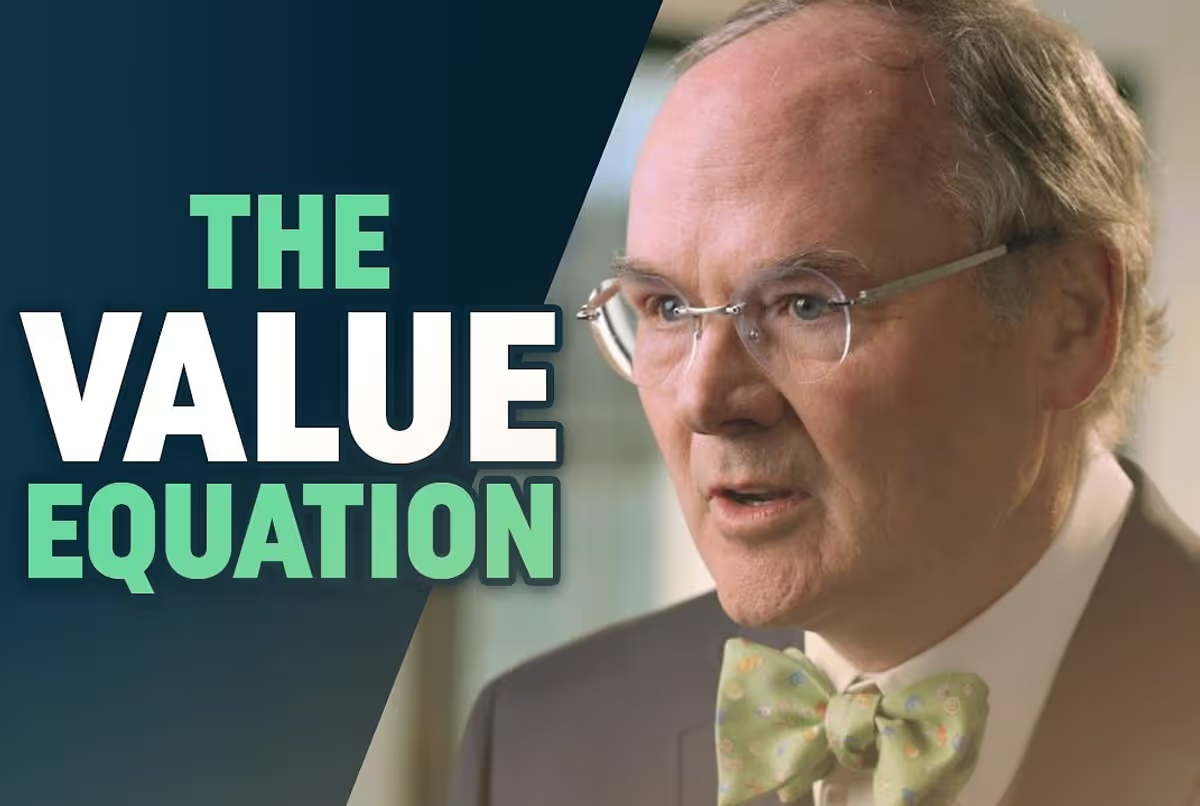
The richest people in America did not get there by saving alone. That is the premise Chris Volk opens with in the first episode of The Value Equation, and it is a deliberate departure from the standard personal-finance script. Saving consistently, limiting debt, and investing early are sound habits, but Volk's point is that they describe how wealth is preserved, not how the largest fortunes were actually built. Those were built through business ownership.
Volk speaks from an unusual vantage point. He has taken three companies public on the New York Stock Exchange, conceiving and co-founding two of them, and is the author of The Value Equation: A Business Guide to Wealth Creation for Entrepreneurs, Leaders, and Investors. The companies he led created billions of dollars in shareholder value, with investors ranging from major institutions, including Berkshire Hathaway, to individual shareholders.
What "Business Rich" Means
The episode's central idea is what Volk calls getting Business Rich, which means building wealth through equity in a business rather than through savings alone. He describes it as being a two-fisted saver. The first fist is conventional: accumulated savings, strengthened by benefits like employer 401(k) matching. The second fist is ownership, working for, leading, or founding a company that rewards you in shares or options. It is the second fist, Volk argues, that separates the merely comfortable from the genuinely wealthy. The wealthiest went further still. They did not just hold a few company shares; they started the company or held senior positions where equity was a meaningful part of their compensation.
The Question the Series Answers
Episode 1 sets up the question the rest of the series works through: how do you know whether the business you are in, or the one you want to start, has the potential to make you Business Rich? Answering it requires understanding what makes a business worth more than it cost to create, where investor returns actually come from, and which levers leaders can pull to improve a business model. Those are the subjects of the episodes that follow.
Key Takeaways
- Conventional financial advice to save, limit debt, and invest preserves wealth; the largest fortunes were built through business equity ownership.
- Being Business Rich means saving with two fists: accumulated savings plus meaningful equity in a business.
- Volk's perspective is grounded in operating experience: three NYSE public offerings and billions in shareholder value created, with Berkshire Hathaway among the investors.
- The series ahead examines what makes a business worth more than it cost to create, and how to evaluate whether yours can be.
Frequently Asked Questions
What does "Business Rich" mean?
Business Rich is Chris Volk's term for wealth built primarily through equity ownership in a business, such as founding a company, leading one, or being compensated in shares, rather than through personal savings alone. It is the central concept of The Value Equation series and his book of the same name.
Who is Chris Volk?
Christopher H. Volk is the Chairman of Tenet Equity and the author of The Value Equation. Over his career he has taken three companies public on the New York Stock Exchange, co-founding two of them, with shareholders that included institutions such as Berkshire Hathaway.
What is The Value Equation series about?
The Value Equation is a video series in which Chris Volk explains how businesses create value: where investor returns come from, what makes a company worth more than it cost to create, and the levers business leaders can use to improve their business models. Episode 1 introduces the series' core idea, getting Business Rich.
Work With Tenet Equity
Tenet Equity puts these principles to work as a real estate capital partner for middle-market companies. If your business owns its real estate and you are evaluating how that capital could be put to more productive use, contact Tenet Equity to start the conversation.